
Showing posts with label Stories of Gambo. Show all posts
Showing posts with label Stories of Gambo. Show all posts
Friday, November 09, 2012
The History of Middle Brook, Gambo
As a permanent settlement of peoples of European and Mi'kmaq descent begins on
Doloman's Point.
In late May or early June of 1834
James and Susanna (nee Honeyburn)
Pritchett and their four children - Mary, Elizabeth, John, and James - landed at
Doloman's Point, Freshwater Bay to set up permanent residence there. James was
33 years old and his wife was 34. Over the next seventeen years they would have
another eight children - Anne Patience (1836), Job (1838), William Absolom
(1839), Caroline(1841), Susanna (1845), George Barnet (1846), Abraham (1849) and
Amy "Emma" (1851) - and lay down roots for a new settlement that would outgrow
itself causing its residents to abandoning the site to move to nearby Middle
Brook.
 According to local lore, James' father, Job Pritchett, had
left England sometime around 1812 to escape the press gangs of that era. He
moved to Goose Bay, Bonavista South (in the Bloomfield area). Sometime after
that Job secured exclusive salmon fishing rights (maybe from Benjamin Lester and
Company of Trinity) to Middle Brook, the Gambo River, and Taverner's (Traverse)
Brook. That meant that every spring Job, with his son, James, and other workers
came into Freshwater Bay to prosecute that fishery. So James was very familiar
with Freshwater Bay and Doloman's Point when he moved there in 1834. James's
father, Job, had passed away the previous year (1780-1833) and now James was the
holder of his father's exclusive rights to fish the three rivers. More than
likely James and Susanna were accompanied in their move by the Barrow, Barry,
Inder, and Feltham families who worked for James. Available to these settlers
was not just the lucrative salmon fishery, but a potential logging and
saw milling industry. The abundance of wildlife in the Bay and up the three
rivers - beaver, martin, lynx, fox (for fur), and bear and caribou and ducks and
geese and hares for food -- also added to the attractiveness of the area. James
believed that with God's help (he was a very religious man) and with hard work,
they could build a new and prosperous settlement.
With James and his father and their fellow workers having
spent many summers (May to August) prior to 1834 in Freshwater Bay, it's likely
that when they settled in in 1834 they had
already built their houses and the requisite wharves and slipways and storage
sheds right on the nose of Doloman's Point. The land on which they built had
already been cleared of trees and brush by Beothucks and Mi'kmaq who had
preceded them into Freshwater Bay. The Beothuck were no more, the last of that
unfortunate race, Shawnandithit, having passed away in St. John's in 1829. The
Mi'kmaq, who had preceded them as permanent settlers in the Bay and had encamped
on Doloman's Point, now numbered a dozen so settled unto on reserve a few miles
away on the northern bank of the Middle Brook River. In 1857 there were six
houses on Doloman's Point and in Clay Cove. These houses belonged to George and
Jane Barrow, George and Diana Inder, Philip and Mary Feltham, John and Ruth
Pritchett, and a James Feltham along with, of course, James and
Susanna.
Since James was primarily a fisher of salmon he had to
build a cooperage to saw the staves needed to make tierces. Tierces were large
barrels that could hold 136kg (300 pounds) of pickled salmon. The packed salmon
he sold to merchants in St. John's who shipped them to Europe where it was a
favourite food for the merchants and aristocrats. For instance, in 1872 James'
sons - John, Abraham, William A., George B., and James - reported that they had
netted 21 tierces of salmon on the Gambo River that summer and had shipped them
in their own schooner to P. and L. Tessier of St. John's who paid them 4
pounds, and 10 shillings (around $120 in 2012 dollars). Meanwhile around this time the
Pritchetts established at the mouth of Traverse Brook a salmon cannery. The
cannery did not prosper for very long because by the late 1800s the number of
salmon entering the rivers in Freshwater Bay was in steep decline. The decline,
in hindsight, was inevitable. The Pritchetts, like all river lords in
Newfoundland having exclusive access to rivers, would tail out their nets at the
mouth of a river in the spring and hold them there until the annual run of
salmon up the rivers was over in July or August. They lifted these nets for one
day a week, Sunday, which meant that salmon could enter the river unimpeded only
one day a week. That one day proved to be insufficient to allow enough salmon to
enter the river to replace themselves in their annual spawning.
The Pritchetts and other residents, as the salmon declined,
turned to the forest industry to replace the salmon as a source of wealth. On
the rivers in which they had set their salmon nets they now built sawmills and
produced lumber for the insatiable lumber markets of St. John's and other large
communities in Conception Bay.
Census reports show that by 1884 there were 41 people in
Doloman's Point/Clay Cove. But, already, the Point was being overcrowded. Along
with the original families, James' sons were now grown and married and had to
have houses of their own. His son, John, had married Ruth Barry in 1855 and they
had built a house on Doloman's Point. His son, William A., had married Susannah
Bourne in 1863 and they were also living on Doloman's Point. His son, Abraham,
had married Rebecca Cross in 1866 and had built a house in Clay Cove. The
crowding on the point probably led James' son, George B., who married Rachel
White in 1872, to build their house in Middle Brook. Their action reflected the
reality of the time. Most men were now taking a good part, if not most of their
living from woods work and sawmill operations along the Middle and Traverse
Brooks and in and around these rivers' watersheds. So people were no longer
settling on the Point and other people already living there were starting to
move away. The first to leave was James Feltham. Within a few years the
Pritchetts had all moved to the south side of Middle Brook River while the
Inders, Barrows, and Felthams took to the north side. By 1894 Doloman's had been
totally resettled. Only the cemetery remained.
Susanna died at the age of 91 and was buried in the
cemetery at Doloman's Point beside her husband, James, who had passed away in
1858. Their son, James , passed away in the same year from the flu and was
buried beside his mother and father, leaving to mourn his wife, Amelia Barry,
with whom he had nine children. Also buried there were Arthur Lewis Pritchett,
Sarah Barry, John Madgwick, infant James Pritchett,et al.
Even before Doloman's Point had completely resettled George
B. and his wife Rachel (1890) had built a water-powered sawmill at Water Point
on the Middle Brook River. By 1892 George's brother, William A., with his wife,
Susanna (neeBourne), had also moved to Middle Brook South and were the
owners/operators of a water-powered saw mill on the Middle Brook River at the
Over Falls. And their brother, Abraham, and his wife, Rebecca, owned and
operated a sawmill on Traverse Brook as well as a general store in Middle
Brook. These three, along with their brother John, also continued to hold the
salmon rights which they had inherited from their father. By 1901 these four men
were part of the fifty families living in Middle Brook South who now had their
own church and school (Church of England). Meanwhile, across the River the
Inders moved into the sawmill business and the Barrows and Felthams worked in
the woods and in the mills. They became Salvationists and built their own church
and school.
In 1964the community of Middle Brook amalgamated with Dark
Cove and the combined community incorporated itself under the name of
"Riverwood". However, that name never took hold because nobody used it. But when
"Riverwood" amalgamated with Gambo on October 3, 1980, the amalgamated
communities took the name of Gambo. It stuck. Now, there is only Gambo
.
Church of England
Cemetery
This cemetery was declared a
historic place by the Gambo Town Council in 2011.
Although the aboriginal Beothucks and Mi'kmaq were frequent
visitors who encamped on this point and may have buried here their deceased, the
earliest known burial in this cemetery occurred, most likely, in April 1777. The
burial plot used was marked by a headstone that identified the deceased as a
nine year old boy named John Madgwick. Other than the information engraved on
the headstone nothing further is known about the boy, his family, the
circumstances of his death, and why he would have been buried here. What,
though, is very interesting is that the headstone was still standing and
decipherable in 1970(?) when a local Anglican clergyman, afraid it would
collapse and be buried under moss and grass, removed it from this site. After
being stored for a number of years in the Middle Brook Anglican Church it was
retrieved, cleaned up, the lettering restored, and erected outside the entry to
the church. It is still there today.
It is fitting to note that the founder of the Doloman's
Point settlement - James Pritchett is buried here. James, who settled
permanently on Doloman's Point in 1834, died here on December 19, 1858. He was
57 years old. Otto Tucker who was a Salvation Army teacher and cadet in Middle
Brook in the 1950 wrote down the inscription engraved on James Pritchett's
headstone which has since crumbled and has been covered with grass and
brush.
Another person known to be buried in this cemetery is Sarah
Barry. Sarah Barry was born in 1872 the daughter of George and Jane Barry who
were at the time living in Clay Cove. Sarah probably died as an
infant.
Another headstone that had already shattered when this
photo was taken in 2005 was that of Arthur Lewis Pritchett. The photo
illustrates that Arthur Lewis was the son of Abraham and Rebecca Pritchett of
Clay Cove. Arthur Lewis was born on October 1, 1882. He died in 1884.
Although there is no headstone remaining in this cemetery
to mark her spot, church burial records reveal that James's wife, Susanna
Honeyburn, is also buried here. She died on May 16, 1891 at the age of 91. Nine
days later her son James, age 57, died and was also buried in this
cemetery.
Who else might be buried in this cemetery is purely
speculative. For example, the records show that James Pritchett's father died in
1833 in Freshwater Bay but there has been nothing found to indicate where he was
buried. Is it possible he's also buried on Doloman's Point, or was he buried in
Goose Bay, Bonavista Bay? As well, there is no burial record for Abraham
Pritchett's first wife, Rebecca (nee Cross), for the Anglican Cemetery in Middle
Brook. It therefore is likely that she would have been buried here in Doloman's
Point. And since infant mortality was very high at this point in history it is
more than plausible that other children were buried in this cemetery.
According to local lore, James' father, Job Pritchett, had
left England sometime around 1812 to escape the press gangs of that era. He
moved to Goose Bay, Bonavista South (in the Bloomfield area). Sometime after
that Job secured exclusive salmon fishing rights (maybe from Benjamin Lester and
Company of Trinity) to Middle Brook, the Gambo River, and Taverner's (Traverse)
Brook. That meant that every spring Job, with his son, James, and other workers
came into Freshwater Bay to prosecute that fishery. So James was very familiar
with Freshwater Bay and Doloman's Point when he moved there in 1834. James's
father, Job, had passed away the previous year (1780-1833) and now James was the
holder of his father's exclusive rights to fish the three rivers. More than
likely James and Susanna were accompanied in their move by the Barrow, Barry,
Inder, and Feltham families who worked for James. Available to these settlers
was not just the lucrative salmon fishery, but a potential logging and
saw milling industry. The abundance of wildlife in the Bay and up the three
rivers - beaver, martin, lynx, fox (for fur), and bear and caribou and ducks and
geese and hares for food -- also added to the attractiveness of the area. James
believed that with God's help (he was a very religious man) and with hard work,
they could build a new and prosperous settlement.
With James and his father and their fellow workers having
spent many summers (May to August) prior to 1834 in Freshwater Bay, it's likely
that when they settled in in 1834 they had
already built their houses and the requisite wharves and slipways and storage
sheds right on the nose of Doloman's Point. The land on which they built had
already been cleared of trees and brush by Beothucks and Mi'kmaq who had
preceded them into Freshwater Bay. The Beothuck were no more, the last of that
unfortunate race, Shawnandithit, having passed away in St. John's in 1829. The
Mi'kmaq, who had preceded them as permanent settlers in the Bay and had encamped
on Doloman's Point, now numbered a dozen so settled unto on reserve a few miles
away on the northern bank of the Middle Brook River. In 1857 there were six
houses on Doloman's Point and in Clay Cove. These houses belonged to George and
Jane Barrow, George and Diana Inder, Philip and Mary Feltham, John and Ruth
Pritchett, and a James Feltham along with, of course, James and
Susanna.
Since James was primarily a fisher of salmon he had to
build a cooperage to saw the staves needed to make tierces. Tierces were large
barrels that could hold 136kg (300 pounds) of pickled salmon. The packed salmon
he sold to merchants in St. John's who shipped them to Europe where it was a
favourite food for the merchants and aristocrats. For instance, in 1872 James'
sons - John, Abraham, William A., George B., and James - reported that they had
netted 21 tierces of salmon on the Gambo River that summer and had shipped them
in their own schooner to P. and L. Tessier of St. John's who paid them 4
pounds, and 10 shillings (around $120 in 2012 dollars). Meanwhile around this time the
Pritchetts established at the mouth of Traverse Brook a salmon cannery. The
cannery did not prosper for very long because by the late 1800s the number of
salmon entering the rivers in Freshwater Bay was in steep decline. The decline,
in hindsight, was inevitable. The Pritchetts, like all river lords in
Newfoundland having exclusive access to rivers, would tail out their nets at the
mouth of a river in the spring and hold them there until the annual run of
salmon up the rivers was over in July or August. They lifted these nets for one
day a week, Sunday, which meant that salmon could enter the river unimpeded only
one day a week. That one day proved to be insufficient to allow enough salmon to
enter the river to replace themselves in their annual spawning.
The Pritchetts and other residents, as the salmon declined,
turned to the forest industry to replace the salmon as a source of wealth. On
the rivers in which they had set their salmon nets they now built sawmills and
produced lumber for the insatiable lumber markets of St. John's and other large
communities in Conception Bay.
Census reports show that by 1884 there were 41 people in
Doloman's Point/Clay Cove. But, already, the Point was being overcrowded. Along
with the original families, James' sons were now grown and married and had to
have houses of their own. His son, John, had married Ruth Barry in 1855 and they
had built a house on Doloman's Point. His son, William A., had married Susannah
Bourne in 1863 and they were also living on Doloman's Point. His son, Abraham,
had married Rebecca Cross in 1866 and had built a house in Clay Cove. The
crowding on the point probably led James' son, George B., who married Rachel
White in 1872, to build their house in Middle Brook. Their action reflected the
reality of the time. Most men were now taking a good part, if not most of their
living from woods work and sawmill operations along the Middle and Traverse
Brooks and in and around these rivers' watersheds. So people were no longer
settling on the Point and other people already living there were starting to
move away. The first to leave was James Feltham. Within a few years the
Pritchetts had all moved to the south side of Middle Brook River while the
Inders, Barrows, and Felthams took to the north side. By 1894 Doloman's had been
totally resettled. Only the cemetery remained.
Susanna died at the age of 91 and was buried in the
cemetery at Doloman's Point beside her husband, James, who had passed away in
1858. Their son, James , passed away in the same year from the flu and was
buried beside his mother and father, leaving to mourn his wife, Amelia Barry,
with whom he had nine children. Also buried there were Arthur Lewis Pritchett,
Sarah Barry, John Madgwick, infant James Pritchett,et al.
Even before Doloman's Point had completely resettled George
B. and his wife Rachel (1890) had built a water-powered sawmill at Water Point
on the Middle Brook River. By 1892 George's brother, William A., with his wife,
Susanna (neeBourne), had also moved to Middle Brook South and were the
owners/operators of a water-powered saw mill on the Middle Brook River at the
Over Falls. And their brother, Abraham, and his wife, Rebecca, owned and
operated a sawmill on Traverse Brook as well as a general store in Middle
Brook. These three, along with their brother John, also continued to hold the
salmon rights which they had inherited from their father. By 1901 these four men
were part of the fifty families living in Middle Brook South who now had their
own church and school (Church of England). Meanwhile, across the River the
Inders moved into the sawmill business and the Barrows and Felthams worked in
the woods and in the mills. They became Salvationists and built their own church
and school.
In 1964the community of Middle Brook amalgamated with Dark
Cove and the combined community incorporated itself under the name of
"Riverwood". However, that name never took hold because nobody used it. But when
"Riverwood" amalgamated with Gambo on October 3, 1980, the amalgamated
communities took the name of Gambo. It stuck. Now, there is only Gambo
.
Church of England
Cemetery
This cemetery was declared a
historic place by the Gambo Town Council in 2011.
Although the aboriginal Beothucks and Mi'kmaq were frequent
visitors who encamped on this point and may have buried here their deceased, the
earliest known burial in this cemetery occurred, most likely, in April 1777. The
burial plot used was marked by a headstone that identified the deceased as a
nine year old boy named John Madgwick. Other than the information engraved on
the headstone nothing further is known about the boy, his family, the
circumstances of his death, and why he would have been buried here. What,
though, is very interesting is that the headstone was still standing and
decipherable in 1970(?) when a local Anglican clergyman, afraid it would
collapse and be buried under moss and grass, removed it from this site. After
being stored for a number of years in the Middle Brook Anglican Church it was
retrieved, cleaned up, the lettering restored, and erected outside the entry to
the church. It is still there today.
It is fitting to note that the founder of the Doloman's
Point settlement - James Pritchett is buried here. James, who settled
permanently on Doloman's Point in 1834, died here on December 19, 1858. He was
57 years old. Otto Tucker who was a Salvation Army teacher and cadet in Middle
Brook in the 1950 wrote down the inscription engraved on James Pritchett's
headstone which has since crumbled and has been covered with grass and
brush.
Another person known to be buried in this cemetery is Sarah
Barry. Sarah Barry was born in 1872 the daughter of George and Jane Barry who
were at the time living in Clay Cove. Sarah probably died as an
infant.
Another headstone that had already shattered when this
photo was taken in 2005 was that of Arthur Lewis Pritchett. The photo
illustrates that Arthur Lewis was the son of Abraham and Rebecca Pritchett of
Clay Cove. Arthur Lewis was born on October 1, 1882. He died in 1884.
Although there is no headstone remaining in this cemetery
to mark her spot, church burial records reveal that James's wife, Susanna
Honeyburn, is also buried here. She died on May 16, 1891 at the age of 91. Nine
days later her son James, age 57, died and was also buried in this
cemetery.
Who else might be buried in this cemetery is purely
speculative. For example, the records show that James Pritchett's father died in
1833 in Freshwater Bay but there has been nothing found to indicate where he was
buried. Is it possible he's also buried on Doloman's Point, or was he buried in
Goose Bay, Bonavista Bay? As well, there is no burial record for Abraham
Pritchett's first wife, Rebecca (nee Cross), for the Anglican Cemetery in Middle
Brook. It therefore is likely that she would have been buried here in Doloman's
Point. And since infant mortality was very high at this point in history it is
more than plausible that other children were buried in this cemetery.
Sunday, September 11, 2011
Ronald Kelly was the log driver
This lighthearted, animated short is based on the song "The Log Driver's Waltz" by Wade Hemsworth. Easily one of the most often-requested films in the NFB collection, Kate and Anna McGarrigle sing along to the tale of a young girl who loves to dance and chooses to
marry a log driver over his more well-to-do competitor. Driving logs down the river has made the young man the best dancing partner to be found. .
And now for the video

About the author/maker of "The log drivers waltz"
Wade Hemsworth grew up in Brantford, Ontario, and learned to play guitar and banjo as a youth. He graduated in 1939 from the Ontario College of Art, and then spent the Second World War in the Royal Canadian Air Force. He was briefly stationed in Newfoundland, where he discovered traditional music. After the war, he worked as a surveyor in wilderness areas of Northern Ontario, Quebec and Labrador, a job which provided him with subject matter for many of his 20 original songs. He moved to Montreal in 1952, where he worked as a draftsman for the Canadian National Railway and performed in the city's folk music clubs at night.
More on this story
http://freshwaterbay.blogspot.com/2007/05/heres-picture-of-my-grandfather-ronald.html
R Brentnall
Toronto Ont.
marry a log driver over his more well-to-do competitor. Driving logs down the river has made the young man the best dancing partner to be found. .
And now for the video

About the author/maker of "The log drivers waltz"
Wade Hemsworth grew up in Brantford, Ontario, and learned to play guitar and banjo as a youth. He graduated in 1939 from the Ontario College of Art, and then spent the Second World War in the Royal Canadian Air Force. He was briefly stationed in Newfoundland, where he discovered traditional music. After the war, he worked as a surveyor in wilderness areas of Northern Ontario, Quebec and Labrador, a job which provided him with subject matter for many of his 20 original songs. He moved to Montreal in 1952, where he worked as a draftsman for the Canadian National Railway and performed in the city's folk music clubs at night.
http://freshwaterbay.blogspot.com/2007/05/heres-picture-of-my-grandfather-ronald.html
R Brentnall
Toronto Ont.


Sunday, August 15, 2010
War Veteran Honoured
Lieutenant-governor unveils plaque for Gambo PoW
Lt.-Gov. John Crosbie was in Gambo last Sunday to help unveil a plaque honouring the life of a Second World War veteran who spent three years overseas as a prisoner of war. Matthew Thomas Brown, 87, died at his home in Gambo on Jan. 4. Known as Uncle Matt within the community, he was predeceased by his wife Mabel Brown, who passed away three years ago.
 “It is an honour to be asked to honour such a man as Matthew Brown, with such a distinguished record he had serving in World War II,” said the lieutenant-governor following the unveiling of the plaque during a ceremony held at the Village Green. In addition to the plaque, a tree has also been planted in Mr. Brown’s honour.
The event was held as a part of the annual Smallwood Days celebration.“Anybody who has been to Beaumont Hamel knows what all our veterans of World War I and II suffered,” said Lt.-Gov. Crosbie.
At the age of 17, Mr. Brown left Gambo and his forestry work for the United Kingdom to train with the British Royal Navy in England and Scotland as part of the Second World War effort. He was deployed to serve on the HMS Bedouin, a Tribal-class destroyer. It served in the 1940 Battle of Narvik off the Norwegian coastline.
The ship, on its way to Malta, was sunk by a pair of Italian torpedo bombers on June 15, 1942, leaving 28 dead.
After nine hours in the water, Mr. Brown was one of 213 men taken as a prisoner of war by the Italian Navy, the beginning of what became a three-year ordeal for the young man.
He was brought to Italy, and once British forces gained control of the country, he was transported to Poland, where he took on forced labour duties in a coal mine for 19 months.
On Dec. 26, 1944, Mr. Brown began what was called a ‘death march’ through Germany, Czechoslovakia, and Austria. The forced winter march went on for 1,600 miles. He obtained his freedom on May 1, 1945.
Nelson Granter, a member of Branch #41 Royal Canadian Legion in Eastport, said it was hard not to know Mr. Brown through his continued presence in the community, particularly at events recognizing past and present war efforts.
“He has been a tribute to the Royal Canadian Legion, and he has constantly encouraged and pushed for remembrance.”
Hardships at home

Mr. Granter put into perspective how Mr. Brown’s experience in Europe affected himself and those at home. Initial letters sent home said he was missing, with no information concluding whether Mr. Brown was dead or alive.
“We seldom think of the home front. When Matthew Brown and his good buddy, Sylvester Hiscock, sailed away to war, they left people at home – people who were concerned and worried.”
Mr. Granter read a letter sent from the Royal Naval Barracks in Chatham, England shortly after the events on the HMS Bedouin.
“Dear Madame. I deeply regret having to inform you that your son, Matthew Thomas Brown, ordinary seaman, has been reported as missing while on war service. There is insufficient evidence at the present time to show whether your son may be alive or not.”
A letter dated July 12, 1942 offered a more encouraging story, as read by Mr. Granter.
“Dear Madame. With reference to my letter of the first of July, official information has now been received that your son is a prisoner of war in Italy.”
Communications were eventually received from Mr. Brown, but were heavily censored to paint a more pleasant picture of what took place during his stint as a prisoner of war.
“In the postcards, everything sounded so rosy. They said, ‘I am doing great. Everything is good. I’m well cared for.’ But that was a false-front, because from prisoner of war camp, postcards would be censored.”
In fact, Mr. Granter said Mr. Brown spent 13-hour work days cold and hungry. The hunger reduced him to eating lice, and Mr. Granter said Mr. Brown used to jokingly refer to the lice as his best friend, as it was the only item a prisoner had plenty of.
In the years since the war, Mr. Brown was known for appearing at Remembrance Day ceremonies, and at the most recent one prior to his death, he spoke to students at Smallwood Academy in Gambo.
“He presented his original navy (beret) to the school. Uncle Matt didn’t normally say much, but that day ... it was just awesome,” said Mr. Granter. “There was absolute silence, and I think even the youngest children knew they were listening to someone significant. “Unfortunately, two months later we lost Uncle Matt, but Uncle Matt’s memory will live forever in Gambo.”
Published on August 5th, 2010 by "The Gander Beacon"
Submitted by Roderick Brentnall
Lt.-Gov. John Crosbie was in Gambo last Sunday to help unveil a plaque honouring the life of a Second World War veteran who spent three years overseas as a prisoner of war. Matthew Thomas Brown, 87, died at his home in Gambo on Jan. 4. Known as Uncle Matt within the community, he was predeceased by his wife Mabel Brown, who passed away three years ago.
 “It is an honour to be asked to honour such a man as Matthew Brown, with such a distinguished record he had serving in World War II,” said the lieutenant-governor following the unveiling of the plaque during a ceremony held at the Village Green. In addition to the plaque, a tree has also been planted in Mr. Brown’s honour.
The event was held as a part of the annual Smallwood Days celebration.“Anybody who has been to Beaumont Hamel knows what all our veterans of World War I and II suffered,” said Lt.-Gov. Crosbie.
At the age of 17, Mr. Brown left Gambo and his forestry work for the United Kingdom to train with the British Royal Navy in England and Scotland as part of the Second World War effort. He was deployed to serve on the HMS Bedouin, a Tribal-class destroyer. It served in the 1940 Battle of Narvik off the Norwegian coastline.
The ship, on its way to Malta, was sunk by a pair of Italian torpedo bombers on June 15, 1942, leaving 28 dead.
After nine hours in the water, Mr. Brown was one of 213 men taken as a prisoner of war by the Italian Navy, the beginning of what became a three-year ordeal for the young man.
He was brought to Italy, and once British forces gained control of the country, he was transported to Poland, where he took on forced labour duties in a coal mine for 19 months.
On Dec. 26, 1944, Mr. Brown began what was called a ‘death march’ through Germany, Czechoslovakia, and Austria. The forced winter march went on for 1,600 miles. He obtained his freedom on May 1, 1945.
Nelson Granter, a member of Branch #41 Royal Canadian Legion in Eastport, said it was hard not to know Mr. Brown through his continued presence in the community, particularly at events recognizing past and present war efforts.
“He has been a tribute to the Royal Canadian Legion, and he has constantly encouraged and pushed for remembrance.”
Hardships at home

Mr. Granter put into perspective how Mr. Brown’s experience in Europe affected himself and those at home. Initial letters sent home said he was missing, with no information concluding whether Mr. Brown was dead or alive.
“We seldom think of the home front. When Matthew Brown and his good buddy, Sylvester Hiscock, sailed away to war, they left people at home – people who were concerned and worried.”
Mr. Granter read a letter sent from the Royal Naval Barracks in Chatham, England shortly after the events on the HMS Bedouin.
“Dear Madame. I deeply regret having to inform you that your son, Matthew Thomas Brown, ordinary seaman, has been reported as missing while on war service. There is insufficient evidence at the present time to show whether your son may be alive or not.”
A letter dated July 12, 1942 offered a more encouraging story, as read by Mr. Granter.
“Dear Madame. With reference to my letter of the first of July, official information has now been received that your son is a prisoner of war in Italy.”
Communications were eventually received from Mr. Brown, but were heavily censored to paint a more pleasant picture of what took place during his stint as a prisoner of war.
“In the postcards, everything sounded so rosy. They said, ‘I am doing great. Everything is good. I’m well cared for.’ But that was a false-front, because from prisoner of war camp, postcards would be censored.”
In fact, Mr. Granter said Mr. Brown spent 13-hour work days cold and hungry. The hunger reduced him to eating lice, and Mr. Granter said Mr. Brown used to jokingly refer to the lice as his best friend, as it was the only item a prisoner had plenty of.
In the years since the war, Mr. Brown was known for appearing at Remembrance Day ceremonies, and at the most recent one prior to his death, he spoke to students at Smallwood Academy in Gambo.
“He presented his original navy (beret) to the school. Uncle Matt didn’t normally say much, but that day ... it was just awesome,” said Mr. Granter. “There was absolute silence, and I think even the youngest children knew they were listening to someone significant. “Unfortunately, two months later we lost Uncle Matt, but Uncle Matt’s memory will live forever in Gambo.”
Published on August 5th, 2010 by "The Gander Beacon"
Submitted by Roderick Brentnall
Sunday, July 18, 2010
The Badger Drive.
There is one class of men in this country,
That never is mentioned in song;
And now, since their trade is advancing,
They'll come out on top before long.
They say that our sailors have danger,
And likewise our warriors bold;
But there's none know the life of a driver,
What he suffers with hardship and cold.
With their pike poles and peavies and bateaus and all,
They're sure to drive out in the spring, that's the time;
With the caulks on their boots as they get on the logs,
And it's hard to get over their time.
Bill Dorothey he is the manager,
And he's a good man at the trade;
And when he's around seeking drivers,
He's like a train going down grade.
But still he is a man that's kindhearted,
On his word you can always depend;
And there's never a man that works with him,
But likes to go with him again.
I tell you today home in London,
The Times it is read by each man;
But little they think of the fellows,
That drove the wood on Mary Ann.
For paper is made out of pulpwood,
And many things more you may know;
And long may our men live to drive it,
Upon Paymeoch and Tomjoe.
The drive it is just below Badger,
And everything is working grand;
With a jolly good crew of picked drivers,
And Ronald Kelly in command.
For Ronald is boss on the river,
And I tell you he's a man that's alive;
He drove the wood off Victoria,
Now he's out on the main river drive.
With their pike poles and peavies and bateaus and all,
They're sure to drive out in the spring, that's the time;
With the caulks on their boots as they get on the logs,
And it's hard to get over their time.
So now to conclude and to finish,
I hope that ye all will agree;
In wishing success to all Badger,
And the A.N.D. Company.
And long may they live for to flourish,
And continue to chop, drive and roll;
And long may the business be managed,
By Mr. Dorothey and Mr. Cole.
Sunday, August 03, 2008
Sunday, April 27, 2008
Genealogy Tidbits

St. John's Wesley Methodist Marriages
What follows is a list of all Brentnall marriages in the St. John's Wesley Methodist Church records held at PANL as of August 2004. This list constitutes a typescript of my handwritten extraction from photocopies of the original records, which is to say that I may have inadvertantly introduced some errors while transcribing and typing... as always, you should double-check against the original records. That said, if you spot any mistakes that I have made, please let me know.
Some comments about this list:
* The entries below are in the same order as presented in the church records, which was not always in chronological order.
At PANL these records are in several volumes as follows:
* 1905 - 1914
* 1914 - 1919
* 1919 - 1923
The format of most of the entries that follow is as follows:
* Line 1: Marriage Number, and Groom's name, abode, occupation, etc
* Line 2: Bride's name, abode, etc
* Line 3: Marriage date and location
* Line 4: List of witnesses
Entries are separated by one or more blank lines.
James Simmons 25 bachelor Labourer St. John's Father: Joseph Simmonds
Annie Brentnall 23 spinster Gambo Father: Robert Brentnall
11 August 1909 at Wesley Methodist Parsonage
Wm Simmons, Beatrice Pike
Monday, December 03, 2007
Famous Newfoundland People
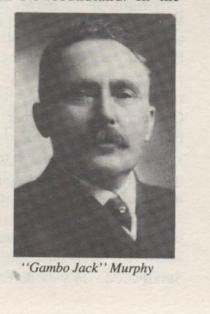
John Joseph Murphy was born at Catalina on 13 May 1849, the son of coastal sailing captain James Murphy and Alice (McDonald) Murphy. He was educated at St. Bonaventure's College in St. John's and became manager of the Greenspond branch of the Harbour Grace firm of Ridley and Sons in 1869. Murphy started his own fishery supply firm in 1871 and was in business at Greenspond until 1876. In that year he left the "general business of the country" and established a sawmill and shipbuilding company at Gambo. A succession of poor fisheries at Greenspond had forced Murphy to give up the supply business. Fortunately, he had previously purchased some sawmill machinery. Murphy applied himself to the development of Newfoundland's interior and natural resources and became one of Newfoundland's first lumber operators. For the next 28 years, "Gambo" Murphy (as he became known) oversaw an expanding establishment at Mint Brook, Gambo. In 1893 he constructed a hotel at Gambo, anticipating that he would be able to attract sportsmen and tourists, as Gambo was connected to the railway being constructed across
Newfoundland by Robert G. Reid. Murphy's hotel also served as station depot for the railway.
In 1904 Murphy sold his mill and logging rights to Newfoundland Timber Estates Ltd., a company owned by timber speculator Harry Crowe, W.D. Reid and American businessman Henry Whitney. He probably invested the proceeds of this sale in his growing interests in "electrification", particularly the United Towns Electric Company, which had been formed in 1902 by Alfred Penney and John P. Powell to supply electric power and lighting to Harbour Grace, Carbonear and other communities in Conception Bay.
Murphy entered politics when he was elected MHA for Harbour Main as a supporter of Edward Morris in the tie election of 1908. He was re-elected when Morris won a majority the following year. Murphy did not seek re-election in 1913, but accepted an appointment to the Legislative Council. He held his seat in the upper house of the legislature until the establishment of Commission of Government in 1934. By 1914 Murphy was United Towns Electric Company's majority shareholder and he was elected president of the company in 1915. In 1919 he formed the Avalon Telephone Company, to purchase the St. John's telephone system from Western Union. Murphy remained president of both companies until his death at St. John's
on 4 August 1938.
(Originally appeared in Vol. XXII of The Newfoundland Quarterly Aug 1974)
In 1904 Murphy sold his mill and logging rights to Newfoundland Timber Estates Ltd., a company owned by timber speculator Harry Crowe, W.D. Reid and American businessman Henry Whitney. He probably invested the proceeds of this sale in his growing interests in "electrification", particularly the United Towns Electric Company, which had been formed in 1902 by Alfred Penney and John P. Powell to supply electric power and lighting to Harbour Grace, Carbonear and other communities in Conception Bay.
Murphy entered politics when he was elected MHA for Harbour Main as a supporter of Edward Morris in the tie election of 1908. He was re-elected when Morris won a majority the following year. Murphy did not seek re-election in 1913, but accepted an appointment to the Legislative Council. He held his seat in the upper house of the legislature until the establishment of Commission of Government in 1934. By 1914 Murphy was United Towns Electric Company's majority shareholder and he was elected president of the company in 1915. In 1919 he formed the Avalon Telephone Company, to purchase the St. John's telephone system from Western Union. Murphy remained president of both companies until his death at St. John's
on 4 August 1938.
(Originally appeared in Vol. XXII of The Newfoundland Quarterly Aug 1974)
Friday, May 18, 2007
Gambo

GAMBO (inc. 1964; pop. 1981, 2932). This incorporated town is situated in a
richly forested river valley where the
Gambo
River meets the sea in
Freshwater
Bay , central
Bonavista
Bay Gambo
The names Gambo and Middle Brook were recorded for the first time in the
Census in 1857; Dark Cove was first recorded in the Census in
1884. Before that time, all settlement sites in the area, which included Hay
Cove, Man Point and Hare Bay, were enumerated under the heading Freshwater
Bay, the name of the long indraft of Bonavista Bay along which they were
situated. According to M.F. Howley (n.d.), the name Gambo is a corruption of
the Spanish or Portuguese name “Bale de las Gamas,” meaning the Bay of the
Does, the name by which the area appears on early maps. According to the
Royal Gazette (Jan. 1964), the area
Middle Brook-Dark Cove was renamed Riverwood on that date, but this name does
not appear to have been used officially or unofficially.
The Gambo area, with its fast-flowing streams draining many ponds, and its
heavily-wooded land with rich, dark soil capable of supporting small-scale
agriculture, has been an attractive area for commercial salmon fishing since
the Eighteenth Century and for industrialized harvesting of its large forest
stands since the mid-Nineteenth Century. It was first visited by salmon
fishermen, who fished the Gambo
River and other streams in
Freshwater
Bay St. John’s merchant William Keen, established
salmon fisheries at Dog
Bay (Horwood) and
Freshwater
Bay (Gambo) as well as stations at
Ragged
Harbour and
Gander
River ,
Notre Dame
Bay Bonavista
Bay
the rights to these rivers.
By 1836 there were permanent settlers inFreshwater
Bay
The earliest settlers in the area probably came toFreshwater
Bay through their connections with
major merchantile firms in Trinity and
Bonavista
Bays Trinity
Bay had salmon fishermen based at
Freshwater
Bay Newfoundland
In the Nineteenth Century salmon wardens regularly reported on the progress of this fishery and commented particularly on over-fishing. The fishery was prosecuted mainly by fishing servants who, having fished the brooks over a period of years, were regarded as the independent, sole proprietors of these waters. It was highly competitive, and even large firms jostled for the right to exclusive ownership with the year-round inhabitants of the brook sides. In 1856 it was noted by an irate warden, who supported the local fishery, that “at Gambo or Fresh Water Bay there are three considerable Brooks discharging into it their waters, viz: Gambo Brook, Middle and Taverner’s Brook . . . the heads of which no one but the occupier of the Brooks should be permitted to fish for salmon” (JHA: 1857, App. p. 345).
Settlers in the Gambo area .by 1871 were Edward Barrow, David, Jacob, Joseph and James Golong (Goulding), Alfred Inder, Jacob and Robert Oakley, Samuel Pretty and Job, John, James and William Pritchett, all fishermen (Lovell’s Newfoundland Directory: 1871). Most of these family names have earlier associations with Greenspond qv (E.R. Seary: 1976), and the Greenspond firm of Brooking and Company was known to be active in the salmon fishery. According to Seary the Pritchett family reputedly settled at Domino Point (Dominion Point),Freshwater
Bay (and later at Middle Brook) after
the patriarch, James Pritchett, had emigrated from Devon to
Goose
Bay in southern
Bonavista
Bay
1832.
One source of local oral tradition (M. Pond: 1973, p. 3) maintains that the first inhabitants of the Gambo area were a Micmac family named Joe, who were encamped atMitchells
Point Bonavista
Bay near heavily forested areas and
good salmon streams, all features of the
Gambo-Freshwater
Bay England
Five male members of the Pritchett family were listed as salmon fishermen on theGambo
River St. John’s)
for £4, lOs per tierce (JHA: 1873, App. p. 817). In his report of the
salmon fishery for the year 1872, John Pritchett noted that,
the rights to these rivers.
By 1836 there were permanent settlers in
The earliest settlers in the area probably came to
In the Nineteenth Century salmon wardens regularly reported on the progress of this fishery and commented particularly on over-fishing. The fishery was prosecuted mainly by fishing servants who, having fished the brooks over a period of years, were regarded as the independent, sole proprietors of these waters. It was highly competitive, and even large firms jostled for the right to exclusive ownership with the year-round inhabitants of the brook sides. In 1856 it was noted by an irate warden, who supported the local fishery, that “at Gambo or Fresh Water Bay there are three considerable Brooks discharging into it their waters, viz: Gambo Brook, Middle and Taverner’s Brook . . . the heads of which no one but the occupier of the Brooks should be permitted to fish for salmon” (JHA: 1857, App. p. 345).
Settlers in the Gambo area .by 1871 were Edward Barrow, David, Jacob, Joseph and James Golong (Goulding), Alfred Inder, Jacob and Robert Oakley, Samuel Pretty and Job, John, James and William Pritchett, all fishermen (Lovell’s Newfoundland Directory: 1871). Most of these family names have earlier associations with Greenspond qv (E.R. Seary: 1976), and the Greenspond firm of Brooking and Company was known to be active in the salmon fishery. According to Seary the Pritchett family reputedly settled at Domino Point (Dominion Point),
1832.
One source of local oral tradition (M. Pond: 1973, p. 3) maintains that the first inhabitants of the Gambo area were a Micmac family named Joe, who were encamped at
Five male members of the Pritchett family were listed as salmon fishermen on the
The Salmon fishery commences about the 10th June, and it leaves about the 10th
August in
Freshwater
Bay Gambo
River Newfoundland Freshwater
Bay Bonavista
Bay Montreal
 1912, with the exception of the Anglo Newfoundland Development Company (AND.) mill built in 1911.
Between 1876 and 1906 Gambo changed from a small fishing-farming area to a bustling group of communities with large sawmills and a burgeoning population. In 1878 a family from St. Brendan’s dammed a small pond at Dark Cove and built a sawmill. A second family from Greenspond settled at Doleman’s Point, Middle Brook, and a sawmill was constructed which utilized the waters of Middle Brook for power.
After the Mint Brook mill was destroyed by fire, Middle Brook
became the site of a 40,000 fbm per day mill (Head: p. 34). While the pine
forests were exhausted by the turn of the century (Hand- cock and Sanger:
1981, p. 46), numerous other small mills came into existence based on the
spruce and fir reserves. Pond (1973) noted the building of the second mill
(made of brick) on Middle Brook in the early 1900s. In 1921 William Pritchet
also started a mill on Middle Brook, and Pond Brothers established a sawmill
in a cove outside Middle Brook. That mill was later relocated on Middle Brook
itself. Other sawmill owners and operatom included Lewis Pritchett, the Hender
Brothers and George Pritchett. Most of these enterprises, with the exception
of those of the Pond, and the Hender Brothers, were short-lived.
The establishment of pulp and paper mills in central and western
Newfoundland created a demand for pulp logs and
from 1938 to the 1960s the
Gambo
Valley Grand Falls . The
A.N.D. Company had also established a mill at Gambo in 1911 and employed many
men in the area. This mill was also phased out in the early 1960s. A series of
forest fires in the area in the early 1960s greatly reduced the commercial
saw- milling and pulpwood operations and by the mid-1960s Bowaters had ceased
all commercial logging in the area.
The beginning of commercial lumbering in the Gambo area in the 1870s was the drawing card for many settlers from the older headlands and island communities ofBonavista
Bay
from 1870 to roughly 1920, and from 1955 to 1965. As related, families from St. Brendan’s and Greenspond moved to Dark Cove and Middle Brook in the 1870s. In 1892 the railway running north from Placentia Junction reached Gambo and roads were constructed by 1894 linking Dark Cove, Middle Brook and Gambo. After fire destroyed the Mint Brook mill in 1907, the residents of that community abandoned it and moved to Gambo. During this era increasing local and world markets for timber, the coming of the railway and Gambo’s increasing importance as a regional administrative and service centre, attracted other new residents. In 1891 Middle Brook numbered ninety-three people; Dark Cove had thirty residents and Gambo River seventy-nine (Census). By 1911 Gambo had 344 residents (many from Mint Brook), Dark Cove had 242 and Middle Brook had a population of 281. The next major rise in population occurred in the 1950s, when twenty Bragg’s Island families resettled in Dark Cove mainly in three areas, known locally as “the Marsh,” “the Waterfront,” and “Pauls’ Hill (Head: 1964: p. 97). According to Head (p. 97) and Handcock and Sanger (p. 46), settlement in the area tended to follow denominational lines established in the first phase of large-scale settlement, with the majority of the Roman Catholic residents settling at Gambo, Anglican and many United Church families tending to settle at Dark Cove and other United Church and Salvation Army residents living at Middle Brook. In the early 1950s the nearby communities of Hay Cove and Mann Point qqv were abandoned and their residents moved to the Gambo area to be close to sources of employment and services. Other families from Fair Island, Deer Island, Gooseberry Islands, flat Island and Bragg’s Island qqv resettled with government assistance throughout the area in the late 1950s and early 1960s, mainly according to family ties and religious denominations, as had been the case with the initial Bragg’s Island to Dark Cove move in 1955 (See Iverson and Matthews: 1978). In 1956 the populations of Dark Cove, Middle Brook and Gambo stood at 808, 681 and 414 respectively. By 1966 they had reached a combined total of 2,446 and by 1976 they stood at 2,977.
The beginning of commercial lumbering in the Gambo area in the 1870s was the drawing card for many settlers from the older headlands and island communities of
from 1870 to roughly 1920, and from 1955 to 1965. As related, families from St. Brendan’s and Greenspond moved to Dark Cove and Middle Brook in the 1870s. In 1892 the railway running north from Placentia Junction reached Gambo and roads were constructed by 1894 linking Dark Cove, Middle Brook and Gambo. After fire destroyed the Mint Brook mill in 1907, the residents of that community abandoned it and moved to Gambo. During this era increasing local and world markets for timber, the coming of the railway and Gambo’s increasing importance as a regional administrative and service centre, attracted other new residents. In 1891 Middle Brook numbered ninety-three people; Dark Cove had thirty residents and Gambo River seventy-nine (Census). By 1911 Gambo had 344 residents (many from Mint Brook), Dark Cove had 242 and Middle Brook had a population of 281. The next major rise in population occurred in the 1950s, when twenty Bragg’s Island families resettled in Dark Cove mainly in three areas, known locally as “the Marsh,” “the Waterfront,” and “Pauls’ Hill (Head: 1964: p. 97). According to Head (p. 97) and Handcock and Sanger (p. 46), settlement in the area tended to follow denominational lines established in the first phase of large-scale settlement, with the majority of the Roman Catholic residents settling at Gambo, Anglican and many United Church families tending to settle at Dark Cove and other United Church and Salvation Army residents living at Middle Brook. In the early 1950s the nearby communities of Hay Cove and Mann Point qqv were abandoned and their residents moved to the Gambo area to be close to sources of employment and services. Other families from Fair Island, Deer Island, Gooseberry Islands, flat Island and Bragg’s Island qqv resettled with government assistance throughout the area in the late 1950s and early 1960s, mainly according to family ties and religious denominations, as had been the case with the initial Bragg’s Island to Dark Cove move in 1955 (See Iverson and Matthews: 1978). In 1956 the populations of Dark Cove, Middle Brook and Gambo stood at 808, 681 and 414 respectively. By 1966 they had reached a combined total of 2,446 and by 1976 they stood at 2,977.
The pull-out of the major pulp and paper companies from the Gambo area and the
1961 forest fire which started near Middle Brook proved to be crushing
economic blows. Increasingly Gambo residents sought employment outside the
community, particularly in
Gander Freshwater
Bay

In 1982 the Gambo labour force continued to be employed in
Gander Fair
Islands and Bragg’s
Island , for the prosecution of the summer
fishery (Rounder: March-April 1981, pp. 35-36). Since the early 1970's
prospective area farmers scouted for suitable land to cultivate and a local
agricultural association was formed. In 1979 there was little local
agriculture but the Development Association invested over $250,000 by 1979 to
encourage agriculture in the region. In 1979 three farms, producing mainly
vegetables and some fruit, were in operation: one at Dark Cove, one at Butt’s
Pond and one south of Gambo (Rounder: May 1979, p.42).
Children were reported to be attending school at Gambo in 1884 and by 1891
there was a school at Mint Brook. According to Pond (p. 42), the first school
in Gambo was reputedly established in Absalom Pritchett’s barn in the late
1800's by a Mrs. Churchill. This was replaced by a more suitable building by
1910. The first church, St. George’s (Church of
England) was also built by this time and later other churches (Salvation Army,
Roman Catholic and
United
Church J.R.
Smallwood
Academy Smallwood
Academy
M. Pond (1973), D.W. Prowse (1895), E.R. Scary (1976), JR. Thoms (1967), Census (1836-1981), Harbour Grace Standard (Oct. 9, 1872), JHA (1851; 1857; 1873), Newfoundland Gazette (Oct. 3, 1980), Royal Gazette (Jan. 1964), Lovell’s Newfoundland Directory (1871), Rounder (May 1979; Mar.-Apr. 1982) Newfoundland Historical Society (Gambo). Map G. JEMP
- submitted by R. F. Brentnall
M. Pond (1973), D.W. Prowse (1895), E.R. Scary (1976), JR. Thoms (1967), Census (1836-1981), Harbour Grace Standard (Oct. 9, 1872), JHA (1851; 1857; 1873), Newfoundland Gazette (Oct. 3, 1980), Royal Gazette (Jan. 1964), Lovell’s Newfoundland Directory (1871), Rounder (May 1979; Mar.-Apr. 1982) Newfoundland Historical Society (Gambo). Map G. JEMP
- submitted by R. F. Brentnall
Monday, May 07, 2007
"They also served" by Tom Curran
For more information please contact the following:
Centre For Newfoundland Studies
Queen Elizabeth II Library
Memorial University of Newfoundland
St. John's, NF
Canada
A1B 3Y1
Friday, April 20, 2007

Friday, February 23, 2007
Newfoundland Forestry Unit
 This is a speech presented by Mulliadh (Mooley) Kelly at the 2002 NOFU Reunion dinner. In it she describes her early life in Scotland, meeting her NOFU husband and her arrival and subsequent life in Newfoundland, Canada.
.
.
Our guest speaker is the former Elizabeth Ormiston, who was born and raised in Scotland. Her father served in both W.W.I and W.W.II. Some people have nicknames or pet names given them when they are young, and our guest speaker is no different. Her grandfather called her his darling, or little dear, in gaelic. This lady married one of the Newfoundland Foresters, Dan Kelly, and became the lady we know as Mulliadh ( pronounced Mooley) Kelly. Mulliadh and Danny had three children born in Scotland and when they came to Newfoundland they decided that, in self defence, the Newfoundlanders should outnumber the Scots, so they had ten more children. The Kellys made their home in Gambo, then in Gander, then back to Gambo, where Mulliadh lives today with a number of her family close by. -Ron Pond
.
.
Hi everyone!
My name is Mulliadh Kelly. Welcome to the Newfoundland Foresters Association 23d. annual gathering and meeting. Ron Pond, our own very capable president, has asked me to share some of my memories of pre-war and wartime, how it had affected me personally, and how I had met Danny, my late husband. I could write a book however, I will just give you a few of the memories. The special ones I will keep for myself. They are precious.
Before the war, I led a very happy, but strict life like we did in those days so long ago. My mom and dad had a farm and guest house. We bred Highland ponies and Highland cattle. My grandfather, Edward Ormiston, won first prize with a black highland mare named Mountain Polly at Olympic Stadium in 1897. My father and brother won again in the 1950's with a stallion. The bred names are gaick,croila, strathmashie and craigdhu. My brother Cameron and his three boys are still involved, so it is fourth generation. He led the parade on horseback one week ago at Blair Atholl Castle, home of the Duke of Atholl, which I had the honor to attend. But I sat in a cart. Getting old, I guess! Dad fought in World War one 1914 - 1918. He was a sniper in the Cameron Highlanders, and then trained commandos at Achnacarry with Lord Lovat in command in the second world war 1939 - 1945. When I finished school I spent most of my time helping with the animals, playing golf, tennis, badminton with the local team, and went to movies. Usual things most young people did in those days. Then everything changed. In 1939 Hitler invaded the countries in Europe and war was declared on September 3, 1939. I remember so well my father calling us all to go to the sitting room, my mother, sister Bunty, brother Cameron, and myself and the servants to listen to the declaration of war on the radio. I was sixteen so it didn't mean much to me at the time. However, it changed everything. I went to deliver gas masks (Dad was in charge of the home guard) to outlying farms and crofts with a friend, Annie MacRae. Most people didn't know what was going on. When we got back to the village of Newtonmore, where we lived, we went directly to the railway station. The trains were bringing women and children north to the highlands from the towns of Edinburgh and Glasgow. They were evacuated as the government was afraid the Germans would bomb and gas all ports in Britain, especially the towns and areas where factories were located. We had 27 children and 2 mothers billeted in our home that night. Some mothers did not come with their children. They probably worked or some such thing. Three of these stayed until the end of the war, but most left and went back home. Guess they got homesick! Within days, most of the young men in the village and surrounding districts were called to war service with the Cameron Highlands Territorial Army. They fought in France and were the rear guard for all who were trying to escape by boat across the English Channel at Dunkirk to England. Most of the local boys were taken prisoner. Many were killed, including two boys who I went to school with and worked for my father, David MacLaughlan and Alister Begg. Davie's brother went back to look for him and was taken prisoner, was reported killed, but turned up at the end of the war.
Everyone dreaded the postman's knock, as that is how people were notified.
I volunteered for work with the Red Cross. I was seventeen that December. We did all kinds of things. Rolled bandages, collected spagrum moss which was used to pack wounds, got packages of food, clothes, cigarettes, etc. to send to the prisoners and other troops who were fighting in all parts of the world. We also tried to keep in touch with writing letters. By this time many people were called up for war service. Women went to work in the factories to make ammunition and whatever was needed for war. We had a blackout. No lights were to be seen, as planes flying over would bomb. We had an alarm system, when they came within five miles of the coast this sounded. My mom would take us all to the food cellar downstairs in the house and stay there until the all clear siren went off. Food was rationed, and stamps for clothes. We had camps everywhere where the soldiers from Canada, Australia, all over.. Britain, India, the Scottish Highland Light Infantry and the Canadian Forestry Corp, training in the hills. The Newfoundlanders arrived in February 1940. There were six camps and a sawmill camp at Laggan, about ten miles from us. Once they got settled they started to come to the village. The first two I met were Joe Mackay and Tom White. They used to go to dances, etc. We had card games and teas and entertainment for them.
I met Danny in 1940. We started dating on the sly. Newfoundlanders were out of bounds to us. I told you dad was strict, but I think it was love at first sight for us. We were allowed to ask some of them to Christmas dinner at our house in 1940. Of course, knowing Danny it was mostly Gambo boys. I can't remember all the names. There was about a dozen, Patrick Kelly (Danny's cousin) Tom, Leo Kelly, Jim Dooley, I think Kevin Hawco and Jim's brother Jack Power (Salmonier) to mention a few. We were allowed to go to the dance in the village that night, Bunty and I, and Mary Leslie (one of the servants) had to go as a chaperone. We soon gave her the slip that night, ha! ha! That same spring the Newfoundland Forestry Unit took over our house for offices and residence for office staff. GlenBanchor Lodge. I have many happy memories of it. It is called Lodge Hotel. I used to visit it for old times sake and slide down the banisters for fun like we did when I was younger and then we moved to Clune House in the village. Any excuse I could get to see Danny I used. I would take horses up to the camps. They used them to haul wood. I had dinner there one day at camp 2 Laggan, waiting for dad to pick me up in the car. Uncle Jim Patrick Kelly from Gambo was in charge of the camps there. It was the first time I ate salt beef, or even seen it. I love it now with peas pudding, bread pudding, vegetables etc.
Love prevailed. Danny and I were married in the Roman Catholic Church in Kingussie in 1941. War continued. We all thought it would be over in no time but it was not to be. The Yanks (as we called them) came late but we managed to land in France again on June 6th. 1944 with the help of the Canadians and commandos. The bombing was much worse and everyone was involved with war. The war was over in 1945. Oh boy! Were we ever glad and happy. We had bonfires, dancing in the streets, lots of bagpipe music and singing and parties to celebrate. All the surviving prisoners of war and soldiers, air force and sailors came home and very quickly life seemed to get back to normal again. We lived more like pre-war days. We would ride horses, golf, play tennis etc. Food was more plentiful, although we didn't have it as bad as other towns. All the towns were bombed during the war and many innocent women and children were killed. There were no more blackouts. Danny volunteered to stay an extra year to help clean up camps and camp sites.
We didn't leave for Newfoundland until July, 1946. We sailed from Liverpool , England on the SS Drottningholm, a Swedish American liner. It took five days. We docked in St. John's on the 18th. of July, 1946 and left by train. That night we arrived in Gambo about 1:30 am July 19th. We had three wee ones by then, Elsie, Michael and Hazel. (Ormistons always were good breeders) Gambo was a cultural shock to me. It was very different, with wooden houses. Different than what it is now, but I won't go into that. I am sure you remember what life was like in those days.
Danny got work in Gander Airport with the Department of Transport as a heavy equipment mechanic in hangar 13. (he had done a correspondence course from Robert Gordon's Technical College in Aberdeen) He received a certificate in Automotive Engineering. He got an apartment in Gander and we moved to Gander in October. We went by train. It was called a weigh freight. We stopped everywhere along the way, picking up cars of wood etc., you name it. We left at 1:30pm and got to Gander about 7:00 pm. It was dark then, but I was glad to be there (although I must say that Danny's mother, who belonged to New Brunswick, and his brother and sisters were so good......) It could have been worse, I guess, but I was so happy to have hot and cold water, electricity, lights and a phone again. We were the first on the Army Side, which is where we lived. Our children went to the first Catholic school that was opened in Gander, Father McCarthy was priest at that time. He was very helpful to me as I took instruction in Danny's church the next year. I was brought up a strict presbyterian. Bunty was born in April, 1948. She is the only "Newfoundlander" I have. My husband Danny was born in St. Stephen, New Brunswick. We were Canadian when the other children were born.

My mom died suddenly on December 28th., 1949 at the age of fifty-one. I was not able to attend the funeral. Planes went overseas once a week in those days. I was so upset, but I will never forget Ina Fry came to visit me (her husband worked in the same building as Danny, she was another war bride and she was of the Salvation Army faith) I really never knew her before, but she was such a comfort to me. We have remained friends. My sister came over for six weeks, which was such a blessing. I had nine more children, Patsy, September 1951, Theresa, who died at eight months "My Angel", then Danny, November 1954.
I went back home for a visit in 1956. Flew BOAC via Shannon, Ireland. It took us 8-1/2 hours. Takes only half that time now. We had moved to the Balavil Hotel in Newtonmore, so it was really different. Lots of people to meet me, but mom was gone. However, we had the same old piano and other furniture around us that we had when we were young, which made it home.
We moved back to Gambo in May, 1956. The road was through to Gambo and the ferry train took you from here to Clarenville. We had a garage and service station, built a house and then the kids started coming again. Born in Gambo were Heather, May 1957, Cameron, December 1958, Catriona, January 1960, Fiona November 1962, St.Andrew's Day (Patron Saint of Scotland) Elizabeth, September 1964 and Ewan, June 1966. Tom and Margaret Curran were great friends and I guess you all knew them. They are Patsy's Godparents. Tom told me I would have a baker's dozen. I laughed at him, but that's what we had. Many happy times we had in Gambo Hotel where Tom and Margaret lived. We always stayed with them. Unfortunately, they have both passed away. Tom will be arguing with somebody, I am sure. Could be Danny! Danny died the 6th. of July, 1984, 18 years ago. I still miss him, but life goes on. I am truly blessed with my large family and there is never a dull moment. I have twenty seven grandchildren, and ten great grandchildren. I have been in Newfoundland 56 years this past July. No regrets! We had our ups and downs, like most people. I have been shown so much kindness since coming. I have all you fine people to call my friends, especially Trixie and Lester Stoyles, Larry and Jean Gladney, Ester Power and, oh! so many more. Thank you all so much! God Bless you! Let's have a great party!
Subscribe to:
Posts (Atom)